=/images/SLIKE-2018/Posjete-i-molitloslovlja/03C0FD00-CD0D-4CD1-9C4F-2E7137830997.jpeg;)
=/images/SLIKE-2018/Februar/01BF1076-F28A-49F5-A42B-95B647C702F4.jpeg;)
=/images/SLIKE-2018/Februar/0BEADBF4-4921-4D70-BD7A-47B9409FAFCE.jpeg;)
Troparion — Tone 4
First-enthroned of the apostles, teachers of the universe: Entreat the Master of all to grant peace to the world, and to our souls great mercy!
Recent Events
Mailing Address
St. Sava Serbian Orthodox ChurchEmail and Phone
frzaricd@gmail.com
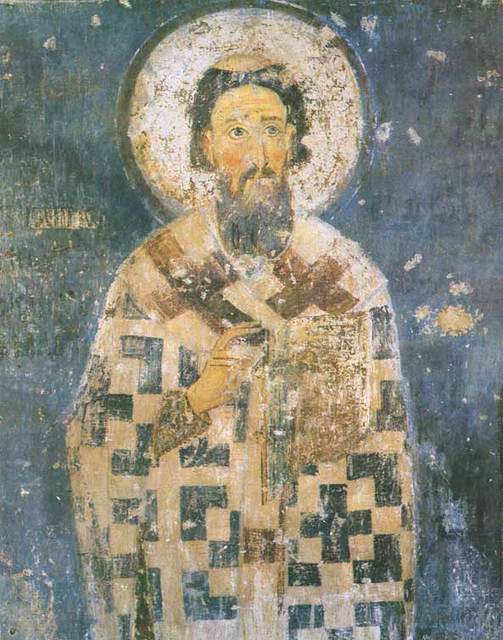
Sava was born Prince Rastko Nemanjic, the son of Stefan Nemanja, the Serbian ruler and founder of the medieval Serbian state. His brother, Stefan Prvovencani, was the first Serbian king. Rastko Nemanjic was born in either 1175 or 1176.
In the early 1190s, the young Rastko left home to join the Orthodox monastic community on Mount Athos. Taking monastic vows, he was given the name Sava (Serbian form of Sabbas) in honour of St. Sabbas. Initially, he joined a Russian monastery, but then moved to the Greek Vatopedi Monastery. At the end of 1197, his father, Grand Prince Stefan Nemanja, joined him. In 1198, together they moved to and restored the abandoned Hilandar monastery, which at that time became the center of Serbian Orthodox Christian monastic life.
St. Sava's father took monastic vows under the name Simeon. He died in the Hilandar Monastery on February 13, 1200. He is also canonized as Saint Simeon.
After his father's death, Sava retreated to an ascetic cell in Kareya which he built himself in 1199. He also wrote the Kareya and Hilandar Typika. The last Kareya typikon is inscribed into the marble board at the ascetic cell. He stayed on Athos until the end of 1207.
When Sava entered his native land in 1207, he unfortunately found the country just as Simeon had informed him in his dream—in total disarray. The Serbian state was split in two. By secret negotiations with Hungary and Pope Innocent III, Vukan, the eldest of the three brothers, who was bitter over the appointment of his younger brother Stephen as heir to the throne, was able to amass troops and capture Zeta; he then was set to launch a campaign against Raška, Stephen's portion of the divided kingdom. This civil war was only a microcosm of a larger conflict instigated by the West—that is, the hostilities initiated by the Great Crusades of the Latin church. In 1204, the soldiers of the Fourth Crusade captured Constantinople and much of the territory of Byzantium, including the Holy Mountain. In 1205, the Holy Mountain was officially placed under the authority and jurisdiction of a Roman Catholic bishop. It is believed that this occurrence was the most influential factor in Sava's decision to return to Serbia. Hence, the Saint returned home with his work cut out for him.
When he returned, Sava brought with him the medicine to heal the entire situation: the relics of his father, the Grand Župan and saint, Stephen Nemanja—Simeon the Myrrh-flowing and co-founder of Hilandar. Upon entering Studenica Monastery, St. Simeon's foundational monastery, Sava invited his two brothers to a proper and rightful memorial service for their father. As the casket was opened, before their eyes the body of their father was found to be sweet-smelling, exuding a fragrant oil and myrrh, warm and aglow, looking very much alive, as if he were only restfully sleeping. This act of veneration of their father was the first step in healing the fraternal schism between Vukan and Grand Prince Stephen. Shortly thereafter, the civil war was halted and a peace agreement was drawn up, once again restoring the kingdom of Serbia as it was under the reign of the great ruler Stephen Nemanja. In discussions with his reunited brothers, Sava also designed plans for an immediate, systematic, and far-reaching missionary program to save the Orthodox souls of the Serbian people. Studenica Monastery, with St. Simeon's relics making it a national shrine, was chosen as the outreach station for all activities. Sava vas appointed Archimandrite of Studenica. St. Sava wrote the Monastery's Typikon, which strengthened Studenica's monastic life.
St. Sava managed to persuade the Patriarch of Constantinople, who was residing in Nicea since Constantinople was under Latin rule until 1261, to establish the independence of the Serbian Church in the year of 1219. At Patriarch Manuel's request, Sava was selected to be elevated to Archbishop. At first, Sava vehemently refused this offer on the grounds that he was truly unworthy for such a position and calling. He offered several of the monks from Hilandar who were present as potential candidates for the position. In the end, Sava accepted and was consecrated in Nicea on the Feast of St. Nicholas, December 6, 1219, becoming the first Archbishop of the newly autocephalous Orthodox Church of Serbia. He was 44 years old at the time.
The following are the exact words of the Greek text of Patriarch Manuel's decree elevating Sava to Archbishop, thus granting autocephaly to the Serbian Church:
After his consecration, Sava returned to the Holy Mountain in order to say farewell to Hilandar and to receive the blessing and prayers of the entire monastic community of the Holy Mountain.
The newly consecrated Archbishop Sava then traveled by boat to Thessalonica, where he tarried awhile at Philokalos Monastery. At Philokalos, he, along with a few others, made a translation from Greek into Slavonic of the Byzantine ecclesiastical law book The Rudder or Nomocanon of St. Photios the Great (9th century). Called KormchajaKnjiga ("Book of the Pilot") in Slavonic, this translation contained not only the ecclesiastical canons—including the dogmatic decrees of the seven Ecumenical Councils—with commentaries by the best medieval Greek canonists, but also numerous precepts of the Fathers of the Church and several of the imperial edicts of the great Byzantine Emperor Justinian (6th century).
When he arrived in Serbia Sava decided that on the first day of his archepiscopacy in Žiča, the Feast of the Ascension, 1220, he would, as the as the newly consecrated Archbishop of Serbia, crown his brother Stephen as the first Serbian king. In 1228 he crowned his nephew Radoslav as king. Venerable Sava decided to visit Jerusalem and the Holy Land. Thus, in 1229, after ten years of dedicated hard work and fruitful labor in the vineyard of the Lord in his homeland, Sava decided to renew his own spirit by making a pilgrimage to the cradle of Christianity itself, Jerusalem, where the Lord first brought salvation to the world. When it was time for Sava to leave the Holy Land for Serbia, he decided to go by way of Nicea. There he met with John, the new emperor of Byzantium (1222-1254) now residing in Nicea, who succeeded Theodore Laskaris. He also met Germanus, the new patriarch who succeeded the late Patriarch Manuel.
In Serbia a new civil war broke out between Radoslav and his brother Vladislav. Unfortunately for Radislav, his military prowess waned as well, for in a fratricidal civil war against his younger brother Vladislav during the summer of 1233, he was defeated and exiled to Durazzo, Albania. Although Sava was unsuccessful in reconciling these brothers—who were both disloyal to their grandfather St. Simeon's call for unity—nevertheless he knew it was better for the country to be ruled by Vladislav. Several years later, as a result of his negotiations with King Vladislav, Sava was able to obtain safe conduct for Radislav, who was allowed to return to Serbia. Unfortunately again for Radislav, his wife had eloped with a French duke during his exile in Albania. Radislav then decided to become a monk, and Sava tonsured him, giving him the name "Jovan (John)."
Sava abdicated from archepiscopal see in 1233 and appointed his most capable pupil St. Arsenije as Archbisop of Serbia (1233-1263). In the spring of 1234, Archbishop Sava, age 59, only five years after his first trip to the Holy Land, decided to make a second pilgrimage to Jerusalem. Upon arrival in Jerusalem, Sava lodged at the St. George Monastery in Akre, a monastery he had purchased from the Latins during his first pilgrimage. Sava visited Patriarch Athanasius of Jerusalem and then went by boat to Alexandria, Egypt, to meet with Pope Nicholas, "Patriarch of Alexandria and all Africa."
He then went to St. Catherine's Monastery on Mt. Sinai, where he spent Great Lent of 1234. This was a most blessed Paschal journey for Sava, for he climbed the heights where the great man of God, Moses the God-seer and Deliverer of his people, had spent many hours speaking to the Lord God face to face as a friend converses with a friend. Sava, too, had been a "Moses" to his people, pastoring, leading and organizing them into a community of God. After the Paschal celebration of 1234, Sava returned to Jerusalem and then traveled to Antioch. After visiting Constantinople, Sava intended to visit the Holy Mountain and Hilandar, but "it did not please the Holy Spirit." Instead, he left for Trnovo, Bulgaria, the capital of King Ivan Asen II's Bulgarian kingdom and patriarch of Trnovo.
Participating in a ceremony called Blessing of the Waters (Agiasmo) he developed a cough that progressed into pneumonia. He died from pneumonia in the evening between Saturday and Sunday, January 14, 1235. [1] He was buried at the Cathedral of the Holy Forty Martyrs in Trnovo where his body remained until May 6, 1237, when his sacred bones were moved to the monastery Mileseva in southern Serbia. 360 years later the Ottoman Turks dug up his relics and burned them in the main square in Belgrade.
There were many miracles at the grave of St. Sava in the Mileševa monastery. Venetian diplomat Ramberty who visited Mileševa in 1534 wrote that not only Serbs, but also Turks and Jews were visiting the monastery and asking for healing. French diplomat Jacques de Chenoais wrote in 1547 that he saw uncorrupted relics of St. Sava; he also said that Turks and Jews were giving bigger donations than Christians themselves. Another passinger as Venetian Zen, and French Lescalonieur were reporting about similar events in 1550 and 1574. Lescalonieur wrote that the head of the saint was covered, because one Turk who saw it died a few decades later. citation needed
St. Sava is remembered as the founder of the independent Serbian Orthodox Church and is celebrated as the patron saint of education and medicine among Serbs. Prince Miloš of Serbia January 13 (Julian), 1830, proclaimed St. Sava the patron saint of Serb schools and schoolchildren. On his feast day, students partake in recitals in church.
The Temple of St. Sava in Belgrade, whose construction was planned to start in 1939 but actually began in 1985 and completed in 2004, is the largest active Orthodox temple in the world today. It was built on the place where the holy bones were burned.
At first we were confused. The East thought that we were West, while the West considered us to be East. Some of us misunderstood our place in the clash of currents, so they cried that we belong to neither side, and others that we belong exclusively to one side or the other. But I tell you, Ireneus, we are doomed by fate to be the East in the West and the West in the East, to acknowledge only heavenly Jerusalem beyond us, and here on earth—no one
Troparion - Tone 3
Kontakion - Tone 8
Troparion - Tone 8
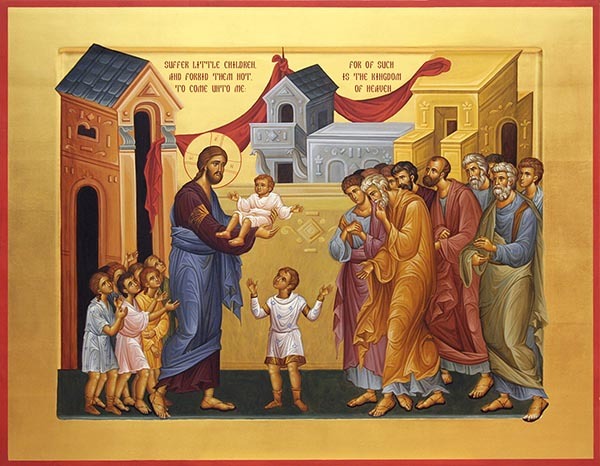
Church School is held Sundays after the Divine Liturgy
Црквена Школа се одржава недељом после Свете Литургије










First-enthroned of the apostles, teachers of the universe: Entreat the Master of all to grant peace to the world, and to our souls great mercy!
O Lord, You have taken up to eternal rest and to the enjoyment of Your blessings the two divinely-inspired preachers, the leaders of the Apostles, for You have accepted their labors and deaths as a sweet-smelling sacrifice, for You alone know what lies in the hearts of men.
Today Christ the Rock glorifies with highest honor The rock of Faith and leader of the Apostles, Together with Paul and the company of the twelve, Whose memory we celebrate with eagerness of faith, Giving glory to the one who gave glory to them!